

Astragalus & Longan Healing Broth
The 黃芪圓肉瘦肉燉湯 has been part of the menu at China Restaurant Yung since the beginning. Wai Wah, the founder of the house, prepared this broth following Cantonese family tradition — slow-simmered in a clay pot, with ingredients from Chinese nutritional medicine as they have been used in Guangdong for generations. Huang Qi slices, longan flesh, lean pork, Chen Pi, ginger — each ingredient holds its place in a balance that has been refined over decades.
The descriptions on this page do not constitute medical claims within the meaning of the German Heilmittelwerbegesetz (HWG). For health concerns, please consult a doctor.
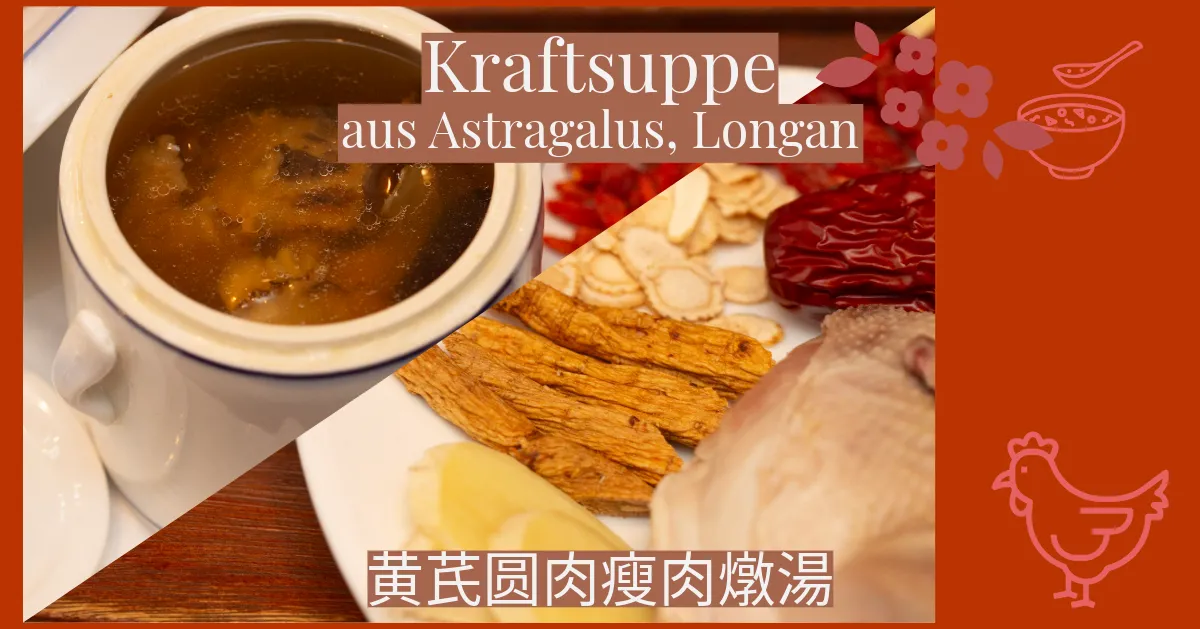
黃芪圓肉瘦肉燉湯 — Astragalus & Longan Healing Broth
The 黃芪圓肉瘦肉燉湯 (Huáng qí yuán ròu shòu ròu dùn tāng) is one of the most recognised tonifying soups in the Cantonese culinary tradition. Two main ingredients give it its name: 黃芪 (Huáng qí) is astragalus — the root of milk-vetch, one of the most widely used herbs in Traditional Chinese Medicine. 圓肉 (Yuán ròu) is dried longan flesh, valued in Cantonese cooking for generations for its blood-nourishing qualities in TCM.
In TCM tradition, this soup stands as a classic preparation for strengthening Qi (vital energy) and nourishing the blood. It is associated most strongly with autumn and winter, when Yang energy recedes and the body calls for building up. In Hong Kong and southern China, it is a household staple — the first thought for many families when someone at home is exhausted or run down.
At China Restaurant Yung, we serve this broth in individual clay pots (砂煲, Shābāo), slow-cooked for a minimum of two hours. This page shares the exact recipe we use and the TCM background behind each ingredient.
Ingredients — quantities for one serving
The amounts below are the clay pot quantities we use at China Restaurant Yung — measured for one person, for a 350 ml clay pot:
| Ingredient | Chinese | Amount (1 serving) | TCM tradition |
|---|---|---|---|
| Eucommia bark (Dù zhòng) | 杜仲 | 2 g | Traditionally used in TCM to strengthen Liver and Kidney, bones and sinews |
| Astragalus slices (Huáng qí) | 黃芪 | 3 g | Traditionally described in TCM as Qi-strengthening, building defensive energy (Wei Qi) |
| Dried longan flesh (Yuán ròu) | 圓肉 / 龍眼肉 | 3 g | Traditionally described in TCM as blood-nourishing, calming the mind, supporting Heart and Spleen |
| Lean pork (Shòu ròu) | 瘦肉 | 60 g | Nourish Yin, protein base for the broth, support Spleen and Stomach |
| Dried tangerine peel (Chén pí) | 陳皮 | 0.3 g | Traditionally described in TCM as Qi-moving, regulating digestion, harmonising herbs |
| Fresh ginger | 薑 | 1 slice | Warm the Stomach, harmonise herb interactions, balance cooling elements |
| Water | 水 | 350 g | Broth base, Water element |
Each ingredient in detail — TCM background
Du Zhong 杜仲 — Liver and Kidney, bones and sinews
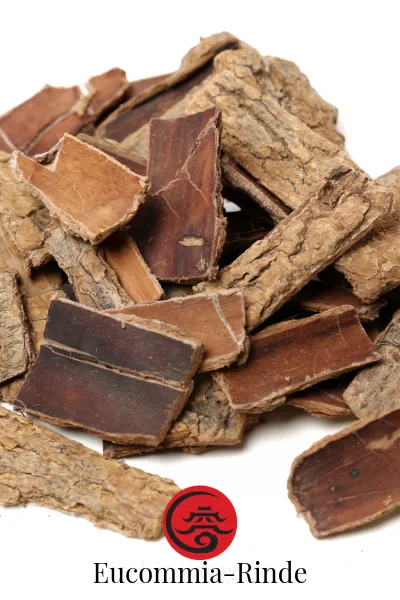
Du Zhong (Eucommia ulmoides, eucommia bark) is one of the classic tonifying herbs of TCM, assigned to the Yang meridian. In TCM tradition, Du Zhong is described as acting on the Liver (歸肝經) and Kidney (歸腎經) meridians. Its traditional applications include strengthening bones and sinews, supporting Kidney Yang, and accompanying back and joint complaints within the TCM framework.
In our healing broth, Du Zhong is used in a small quantity (2 g) — it is not a flavour carrier but a background voice. Its bark is recognisable in the clay pot by its greyish-brown colour and a faintly bitter undertone, gently framed by longan and Chen Pi.
Seasonal context: In TCM, autumn is considered the primary season for Kidney-tonifying herbs, as Kidney Yin is particularly in need of support during this time. This broth is therefore a classic autumn preparation.
Huang Qi 黃芪 — The Qi herb, defensive energy and the body’s surface
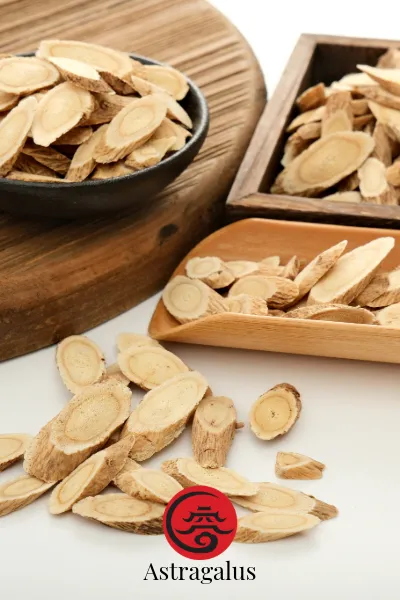
Huang Qi (Astragalus membranaceus) is one of the best-known Qi-tonifying herbs in TCM, also called 北芪 (Běi qí, „northern Qi“). In TCM tradition it acts on Spleen and Lung, strengthens Wei Qi (衛氣) — the defensive Qi at the body’s surface — and is classically used during periods of exhaustion and as an autumn-winter preventative.
The dried Huang Qi slices give the broth a gently sweet, earthy base. Over the long cooking time in the clay pot, part of the active components are extracted into the broth. Huang Qi is one of the few herbs used regularly in everyday Cantonese soups — not just in the pharmacy, but on the stove.
Yuan Rou 圓肉 — Longan, nourishing blood, calming the mind
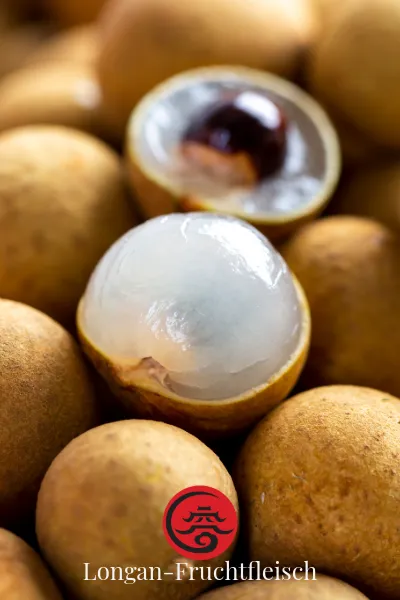
Yuan Rou (圓肉, also 龍眼肉 Lóngyǎn ròu) is dried longan flesh. In TCM tradition it is assigned to the Heart and Spleen meridians and traditionally described as blood-nourishing (養血), calming the mind (安神), and supporting the Heart (補心). It is one of the few aromatic elements in this broth: the longan lends a delicate, natural sweetness.
In Cantonese cooking, Yuan Rou is one of the most frequently used dried fruits in soups — often alongside red dates or goji berries. In our recipe, Yuan Rou is a central ingredient, not a flavouring addition, but an equal partner alongside Huang Qi. The Cantonese name „圓肉“ (literally „round flesh“) refers to the shape of the dried longan kernel — round, leathery, deep brown.
Chen Pi 陳皮 — Aged tangerine peel, digestion and harmony
Chen Pi (陳皮, dried and aged tangerine peel) is assigned in TCM tradition to the Qi-moving category and is considered harmonising for Spleen and Stomach. In soups, Chen Pi serves a dual role: it regulates digestion and helps the more demanding tonifying herbs to be better integrated. It also adds a gentle bitterness that balances the sweet note of the longan.
The quantity in this recipe is deliberately small (0.3 g) — a narrow strip of peel, nothing more. Chen Pi is a herb harmoniser: it is not meant to taste, it is meant to bring order to the interplay of the other ingredients.
Ginger — warmth, Stomach and the herb bridge
One slice of fresh ginger. In TCM tradition, ginger is considered warming, settling for the Stomach, and a classic bridging ingredient in herbal broths. It reduces the cold quality of some ingredients and supports nutrient absorption through the digestive tract. In this broth, ginger is not a flavour component — it barely comes to the foreground — but a quiet support.
Note: The TCM attributions described here are based on the tradition of Chinese dietary medicine. Astragalus root, longan and Du Zhong are not approved medicinal products in Europe — the descriptions are provided in a cultural-historical and food-science context. If you have health concerns, please consult a physician.
How the healing broth is prepared — slow-cooked in a clay pot
At China Restaurant Yung, this broth is prepared in individual clay pots (砂煲, Shābāo). Every guest receives their own pot. The cooking time is a minimum of two hours.
- Blanch the meat. Briefly blanch the lean pork (60 g) in boiling water — about 2 minutes. Drain and rinse. This removes impurities and gives the broth clarity later on.
- Soak the dried herbs. Soak Du Zhong (2 g), Huang Qi (3 g) and Yuan Rou (3 g) in cold water for 15–20 minutes. This softens the herbs and makes it easier for the active components to be extracted into the broth.
- Combine in the clay pot. Add the blanched meat, soaked herbs (with their soaking water), Chen Pi (0.3 g) and a slice of ginger to the clay pot. Fill with 350 g of water.
- Slow cook. Simmer the clay pot on low heat for at least two hours — the pot should bubble gently, not boil hard. A clear, golden broth will develop.
- Salt at the end. Add salt only when the broth is finished. In TCM culinary tradition, salt is used sparingly — the natural flavour of the herbs should remain in the foreground.
- Serve in the clay pot. The broth stays in its pot — it retains the heat and belongs to the atmosphere of the meal.
„Wai Wah made this broth in our kitchen, week after week. The clay pot simmers in autumn — this is not a recipe from a book, it is family tradition that lives on at China Restaurant Yung today.“
When is this broth traditionally consumed?
In TCM tradition, this broth is recommended above all in autumn and early winter — when temperatures fall, Yang energy recedes and the body calls for building up. It also fits other seasons when fatigue or recovery is the focus.
In Hong Kong and southern China, this broth is often drunk as a starter before the main course — not as a full meal, but as a restorative opening. At China Restaurant Yung, we serve it as a standalone course or on request as an accompaniment to the main dish. Our season for this broth begins in September.
Context within the healing broth collection
This is the first broth in the healing broth collection at China Restaurant Yung. Further broths will follow in the coming weeks. As an accompaniment, we also recommend our steamed romaine lettuce Yung-style — another dish from the Yung kitchen that brings TCM elements into everyday dining.
Further ingredient pages on the individual herbs in this broth — Du Zhong (in preparation), Huang Qi, Yuan Rou, Chen Pi, ginger, goji berries and dried dates — are available in our ingredients library.
The TCM attributions on this page are based on the tradition of Chinese nutritional medicine. These attributions can be debated — we categorise to the best of our knowledge and belief. The descriptions do not constitute medical claims within the meaning of the German Heilmittelwerbegesetz (HWG). For health concerns, please consult a doctor.
Frequently asked questions about the Astragalus and Longan healing broth
What is Du Zhong (杜仲) and why is it in this broth?
Du Zhong is the dried bark of the eucommia tree (Eucommia ulmoides). In TCM tradition, Du Zhong is described as acting on the Liver and Kidney meridians and used to strengthen bones and sinews. It is one of the classic tonifying herbs of the Cantonese autumn kitchen. In the broth it is present at 2 g — a background voice, not a flavour component.
Can I make this broth without Du Zhong?
Yes. Without Du Zhong, the broth becomes a classic Huang Qi Yuan Rou soup — the most widely known version of this recipe in Cantonese households. Du Zhong adds the Liver-Kidney dimension in TCM systematics. If Du Zhong is not available (not every Asian grocery carries it), it can be left out or replaced with dried red dates (Hóng zǎo).
How long is the cooking time — and why so long?
At least two hours on low heat. The dried herbs — especially Du Zhong and Huang Qi — need time to release their active components into the broth. A clay pot simmered for too short a time produces a pale, thin broth. Two hours of simmering brings the golden colour and the deep, mild flavour. In the restaurant we sometimes work with three hours of cooking time.
Can I prepare the broth in advance and reheat it?
Yes — clay pot broths keep well in the refrigerator for 2–3 days. Reheating in the clay pot (slowly, on low heat) is better than the microwave, because the flavours continue to develop during slow reheating. Freezing is possible, but slightly alters the texture of the longan.
Disclaimer: The TCM descriptions on this page are based on Chinese dietary medicine tradition and do not constitute health claims within the meaning of applicable advertising law. If you have health concerns, please consult a physician.