

How Is Peking Duck Prepared?
A step-by-step process defining texture, crispness and juiciness.
Requirements for Perfect Peking Duck
The preparation of Peking Duck is a precise, multi-step process. It determines whether the skin becomes crisp, the meat remains juicy, and flavors stay clean and defined.
Selecting and Preparing the Duck
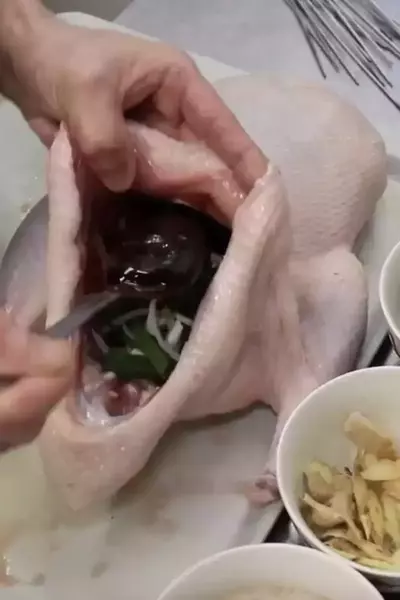
The duck must be evenly grown with sufficient subcutaneous fat. It is carefully cleaned and completely dried before further processing.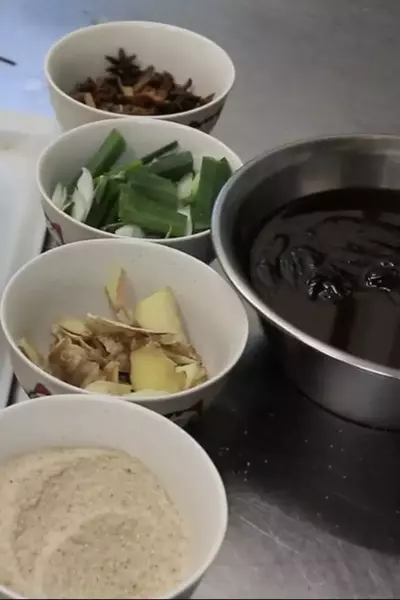
Separating Skin and Meat Using Air
Air is gently introduced to separate the skin from the meat. This step allows fat to escape and enables independent crisping of the skin.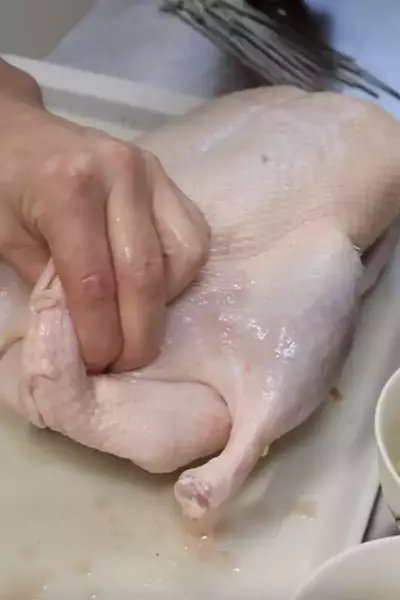
Why Blanching Matters
Pouring hot water over the skin tightens it, closes pores and prepares it for drying.
Maltose and Surface Treatment
A thin maltose layer ensures even drying, shine and crispness. It is functional, not flavor-driven.
Drying and Resting Phase
The duck is dried for many hours or days under controlled airflow and low humidity.
Preparation for Roasting
Before roasting, the duck is checked, hung and positioned to ensure even heat exposure.
Preparation vs. Cooking
Preparation creates the conditions; cooking controls timing and temperature only.
Why Craft Cannot Be Rushed
Each step depends on the previous one. Shortcuts almost always compromise quality.
Connection to Carving Technique
Proper preparation enables precise carving. See: Peking Duck Carving.FAQ
How Is Peking Duck Prepared?
A step-by-step process defining texture, crispness and juiciness.
Requirements for Perfect Peking Duck
The preparation of Peking Duck is a precise, multi-step process. It determines whether the skin becomes crisp, the meat remains juicy, and flavors stay clean and defined.
How Is Peking Duck Prepared?
How Is Peking Duck Prepared?
How Is Peking Duck Prepared?
Table of Contents
Selecting and Preparing the Duck
The duck must be evenly grown with sufficient subcutaneous fat. It is carefully cleaned and completely dried before further processing.
Separating Skin and Meat Using Air
Air is gently introduced to separate the skin from the meat. This step allows fat to escape and enables independent crisping of the skin.
Why Blanching Matters
Pouring hot water over the skin tightens it, closes pores and prepares it for drying.
Maltose and Surface Treatment
A thin maltose layer ensures even drying, shine and crispness. It is functional, not flavor-driven.
Drying and Resting Phase
The duck is dried for many hours or days under controlled airflow and low humidity.
Preparation for Roasting
Before roasting, the duck is checked, hung and positioned to ensure even heat exposure.
Preparation vs. Cooking
Preparation creates the conditions; cooking controls timing and temperature only.
Why Craft Cannot Be Rushed
Each step depends on the previous one. Shortcuts almost always compromise quality.
Connection to Carving Technique
Proper preparation enables precise carving. See: Peking Duck Carving.
Why is preparation so elaborate?
Because texture and crispness require exact physical conditions.
Does humidity matter?
Yes, excessive humidity prevents proper skin drying.
Is maltose essential?
It is traditionally used to protect and dry the skin effectively.
How long does preparation take?
Between 24 and 72 hours, depending on method.
Can steps be skipped?
No, each step is functionally necessary.
What happens if preparation fails?
The skin becomes soft or greasy, meat loses structure.
Because texture and crispness require exact physical conditions.
Yes, excessive humidity prevents proper skin drying.
It is traditionally used to protect and dry the skin effectively.
Between 24 and 72 hours, depending on method.
No, each step is functionally necessary.
The skin becomes soft or greasy, meat loses structure.