

Bell Pepper (Sweet Pepper) – The Colourful Vitamin-C Bomb
Bell Pepper – The Colourful Vitamin-C Bomb from the Wok
The bell pepper (Capsicum annuum, Chinese „Cǎi Jiāo“, 彩椒, or 燈籠椒 dēng-lóng-jiāo „lantern pepper“ for block-shaped sweet pepper) brings colour, crunch and vitamin C to Chinese cooking – and that in a concentration that makes oranges look old. Red bell peppers contain up to three times more vitamin C than an orange, plus a palette of carotenoids built up only as the fruit ripens. In the ingredient overview of China Restaurant Yung, the bell pepper is the vegetable that visually elevates every wok dish while quietly improving its nutrient balance.
The bell pepper originates in Central and South America and only arrived in Asia after the 15th century – a young guest in Chinese cuisine, but one that quickly became indispensable. In Traditional Chinese Medicine it has no classical entry like carrot or ginger – it is used pragmatically: cooling or neutral, sweet, energy-giving. Modern science knows it as a first-rate carotenoid and flavonoid bomb.
ChinaYung Essence: Bell pepper is colour with function – the red and yellow in the wok is no decoration but concentrated nutrition.

Nutrient Profile at a Glance
| Botanical family | Solanaceae (nightshades) – related to tomato, potato |
|---|---|
| Flavour (TCM) | Sweet (甘), neutral to slightly cooling |
| Meridian direction (TCM) | Spleen (脾), Stomach (胃) |
| Key compounds | Vitamin C (very high), beta-carotene, capsanthin, quercetin, luteolin, vitamin B6 |
| Vitamin C (red, raw) | ~ 190 mg/100 g (3× higher than orange) |
| Energy content | ~ 31 kcal per 100 g (raw) |
| Colour-nutrient relation | Red > orange > yellow > green (carotenoid maturity rises with colour) |
More on vitamin C and carotenoids in our nutrient section.
Botany & Origin
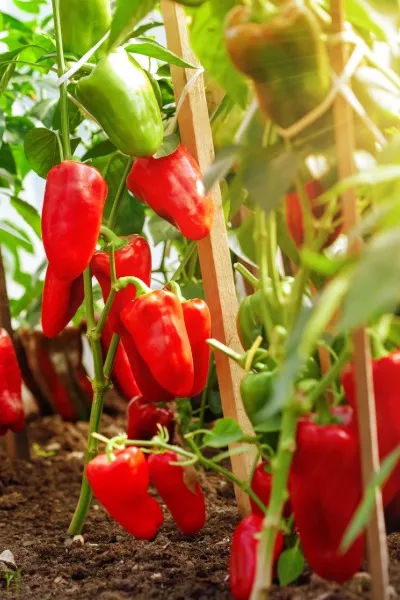
Capsicum annuum was cultivated by the Aztecs and Maya for over 6000 years. After the arrival of European explorers in the 15th century, it spread explosively across Europe, Africa and Asia – one of the fastest distributions of a cultivated plant ever. In China, bell pepper arrived in the 16th–17th century and became especially at home in Sichuan and Hunan cuisine (as the spicy chilli variant).
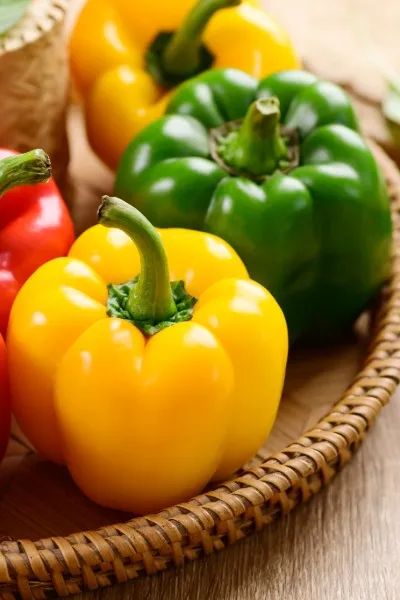
The sweet bell pepper (sweet, without capsaicin) is a cultivar in which the heat genes have been switched off. Colour depends on ripeness: green bell pepper is unripe red bell pepper (more chlorophyll, fewer carotenoids, more tannins, more bitter). Red and yellow bell peppers are fully ripe – aromatically sweeter and more nutrient-dense.
Botanically the bell pepper belongs to the nightshade family – along with tomatoes, potatoes and aubergines. Related also to chilli, but bred without capsaicin. Note: Piper nigrum (black pepper) is NOT related – that is a naming coincidence.
Main Scientific Effects
- Vitamin C – immune booster and collagen-synthesis enzyme: Red bell pepper delivers ~190 mg vitamin C/100 g. Vitamin C is essential for collagen synthesis (skin, joints), immune-cell function, iron absorption from plant sources and as an antioxidant. Michael Greger recommends vitamin-C-rich foods daily. [Greger HNTA, „Preserving Your Skin“ Ch. 40]
- Capsanthin – the red carotenoid: Capsanthin is the dominant carotenoid in red bell pepper – it is not converted to vitamin A, but acts strongly antioxidant. Together with carrot carotenoids it provides optimal carotenoid variety.
- Iron-absorption synergist: Vitamin C from bell pepper increases the absorption of non-heme iron (from tofu, legumes, leafy greens) by up to 300 %. One of the most important synergy functions in plant-based nutrition. More in our nutrient section.
- Eye nutrients: Lutein and zeaxanthin in bell pepper protect the macula – analogous to carrots.
- Anti-inflammatory: Quercetin and luteolin in bell pepper inhibit inflammation mediators. Luteolin has shown particularly strong anti-proliferative effects in laboratory studies. More under health goals.
Culinary Application – In the ChinaYung Kitchen
Bell pepper at ChinaYung serves three functions: colour, texture, vitamin-C synergist.
- In the wok: Bell-pepper strips (red + yellow for visual contrast) are briefly seared – 2–3 minutes, bite retained. Together with broccoli, carrots and tofu, the classic Chinese wok-vegetable quartet.
- Stuffed and steamed: Bell pepper as container for minced meat or tofu fillings, then steamed – a classic dim-sum-inspired dish.
- Raw in salads: For maximum vitamin-C retention – vitamin C is heat-sensitive, so raw is more nutrient-dense. Julienne strips with rice vinegar and sesame oil.
- In sauces: Bell pepper pureed as a natural sweetener and texture body without sugar – in sweet-and-sour sauces and glaze reductions.
All dishes with bell pepper on our menu.
Synergies & Bioavailability
- Bell pepper + tofu: Vitamin C from bell pepper + non-heme iron from tofu = maximum iron absorption. Nutritionally one of the most valuable combinations in Chinese plant-based cooking.
- Bell pepper + carrots: Carotenoid synergy – capsanthin and beta-carotene act on different oxidative-stress pathways. Both fat-soluble: in the wok with oil better absorbed.
- Red > green for nutrients: Red bell pepper has 11× more beta-carotene and 2× more vitamin C than green. For maximum nutrient content: prefer ripe red or orange bell peppers.
- Bell pepper + broccoli: Vitamin C + sulforaphane – both heat-sensitive, so prefer short wok time. Maximises active-compound retention of both ingredients.
Preparation & Storage
Cutting: Cut off the top, remove seeds and white inner partitions (bitter compounds) – then strips, cubes or rings. The white inner skin has few nutrients and an unpleasant texture raw.
Preserve vitamin C: Short cooking time (2–3 min wok) or raw. Vitamin C starts to degrade noticeably above 60 °C. Steaming is gentler than boiling (no leaching).
Peeling: Do not peel raw. Roasted/grilled (over open flame or in the oven) the skin pops off and removes easily – gives a smoky-sweet aroma.
Storage: In the fridge (vegetable drawer) whole for 1–2 weeks. Cut bell pepper wrapped in foil 3–5 days. Freezing possible – cut raw into strips, freeze (texture OK for cooking, not for raw use).
Caution & Contraindications
- Nightshade sensitivity: Some people with inflammatory conditions (rheumatism, arthritis) react sensitively to nightshades (solanine, calcitriol precursors). With such a diagnosis, test individual tolerance.
- Histamine intolerance: Red and yellow bell peppers are potential histamine liberators. With histamine intolerance, possibly restrict; green bell pepper is generally better tolerated.
- Oxalates: Bell pepper contains moderate amounts of oxalic acid – with oxalate-related kidney stones, moderate portion sizes.
More on food intolerances in our basics section.
Science & Tradition in Dialogue
Since bell pepper only arrived in China in the 16th–17th century, there is no classical TCM monograph for it – it is a „modern“ food in TCM systematics. What TCM does intuitively: bell pepper is categorised pragmatically by its properties (sweet, slightly cooling) and used – as a Qi tonic for spleen and stomach.
Science delivers what TCM could not know: capsanthin, vitamin C and luteolin are compounds only characterised in the 20th century. The combination of all three makes bell pepper a nutritional exception.
In our ingredient overview, bell pepper complements the carotenoid picture alongside carrots – each ingredient brings different carotenoid variants. More on the healthy nutrition picture in our health section.
Summary – Colour Is Nutrition
Bell pepper is proof that colour is a nutrient. The red and yellow in the wok is not decoration – it is vitamin C, capsanthin, quercetin and luteolin, together supporting the immune system, eyes and iron absorption. As a quickly prepared, versatile vegetable, bell pepper belongs in every Chinese wok kitchen.
Related ingredients: carrots (carotenoid pair) · broccoli · tofu (iron-vitamin-C synergy) · all ingredient monographs · health section.
FAQ
Which bell-pepper colour is healthiest?
Red and orange. They are fully ripe variants with the highest carotenoid and vitamin-C content. Green bell pepper is unripe and significantly less nutrient-dense – but has fibre and chlorophyll. Yellow sits between red and green. Conclusion: the more colourful, the better.
Can I eat bell pepper daily?
Yes, no problem for most people. With nightshade sensitivity or histamine intolerance, observe individual tolerance. More on health goals.
Is paprika powder the same as bell pepper?
No. Paprika powder is made from dried and ground Capsicum fruits (often sweet, half-spicy or spicy variants). Different aroma, different nutrient profile, different use. Vitamin C is largely destroyed by drying.
Why is red bell pepper sweeter than green?
Green bell pepper is unripe and still contains chlorophyll + tannins (bitter). With ripening, sugars are built up, acids broken down, chlorophyll replaced by carotenoids – the result is sweet-aromatic red bell pepper. More on ripening processes in our basics section.
Data Provenance: Vitamin-C retention curves and Solanaceae nightshade-sensitivity flags come from our internal nutrient catalogue (LMIV-14 allergens plus 13 additive classes, harmonised supplier sources). Daily cross-checked against EU labelling regulations and carotenoid maturity profiles via our ChinaYung-Software (German site).
Note: The information on this page serves general education and does not replace medical, nutritional or pharmaceutical advice. Statements about health effects are not therapeutic promises and do not correspond to the health claims approved by the European Food Safety Authority (EFSA) under Regulation (EC) No. 1924/2006. In case of illness, pregnancy, breastfeeding or use of medication, please consult a medical professional before changing your diet. Book sources used are named in the text; further study sources available on request.