

rice-noodles-with-beef
The Essence of the Dish
乾炒牛河 (Gan Chao Niu He) is a refined dish of Cantonese cuisine, distinguished by its crispy rice noodles and tender beef.
It embodies the philosophy of quick wok cooking – a balance of texture, flavor, and precision only achievable through high heat and skilled craftsmanship.

What is Gan Chao Niu He?
The dish consists of rice noodles (Ho Fun) stir-fried with beef, soy sauce, bean sprouts, and scallions in a scorching hot wok. The name 乾炒 (Gan Chao) means „dry stir-fry“ – no additional sauce is added, only the natural juices of the ingredients and a touch of soy sauce.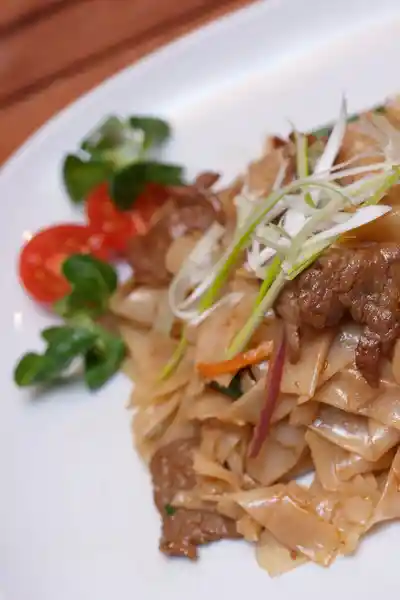
The Meaning of 乾炒 (Gan Chao)
乾炒 refers to a specific wok technique where ingredients are stir-fried without liquid. It requires high heat and precise timing to keep the noodles crispy without burning them. This technique is a hallmark of wok mastery, distinguishing Gan Chao Niu He from other noodle dishes.
The Role of Rice Noodles
Rice noodles (Ho Fun) form the foundation of the dish. They are briefly soaked in water before cooking to achieve the right consistency. During wok-frying, they retain their elasticity while absorbing the flavors of the sauce – a balance of tenderness and bite.
The Choice of Beef
Tender beef is sliced thinly and marinated with soy sauce, starch, and Shaoxing wine. It is stir-fried only briefly to preserve juiciness. This is crucial for texture – the beef should be tender but not tough.
The Art of Wok-Hei
Wok-Hei (breath of the wok) is the invisible element that distinguishes the dish. It forms through high heat, lightly charring the noodles and imparting a smoky flavor. Without wok-hei, Gan Chao Niu He is just another noodle dish – with wok-hei, it becomes a culinary experience.
Cultural Significance in Cantonese Cuisine
In Cantonese culture, Gan Chao Niu He symbolizes everyday life and culinary mastery. It's often consumed as breakfast or lunch in Hong Kong and is a popular dish in teahouses. The way it's prepared reflects the importance of speed and precision.
Seasonality and Serving Suggestions
The dish is popular year-round but especially cherished in cooler months for its warming effect. Traditionally served with a hint of chili sauce to enhance flavors. Pair with steamed vegetables or a clear soup.
Why Not Excessive Soy Sauce?
Too much sauce would destroy the "dry" stir-fry method and make the noodles soft. The classic preparation uses only a touch of soy sauce to highlight the natural flavors of the ingredients – a sign of balance in Cantonese cuisine.
Summary
乾炒牛河 is a true wok benchmark: simple ingredients, but all about technique, heat, and timing.