

All About Dim Sum
Dim Sum 點心 – small dishes, great balance
Dim Sum 點心 represent one of the most refined expressions of Cantonese cuisine. Not because of their size, but because of their principle: many small dishes, precisely crafted, consciously combined.
Dim Sum are not appetizers. They are an independent food culture – created to make diversity tangible without overwhelming the body.

What Dim Sum really means
Dim Sum 點心 literally means “to touch the heart”.
In southern Chinese food culture, this term does not describe a single dish, but an attitude towards eating: small units, crafted with precision, served in variety and shared together.
According to legend, Dim Sum originated at the imperial court when concubines complained about the monotony of daily meals. The court chef did not respond with larger portions, but with diversity in small forms – delicately folded, differently filled and prepared using different techniques.

A counter-design to monotony
This principle still defines Dim Sum today:
- no dominance of a single flavor
- no overload through one large dish
- variety, curiosity and balance
Dim Sum are therefore a conscious counter-design to monotonous eating.

Digestibility through diversity
Dim Sum is not diet food. But it follows a principle that is gaining renewed importance today: diversity instead of one-sidedness.
Eating Dim Sum naturally combines different ingredients, textures, cooking methods and small portions instead of one heavy load. This variety does not feel light by coincidence – it is structurally designed that way.
Ingredients & culinary attitude
This comes with a clear commitment to quality:
Where certain fresh ingredients are not available (e.g. water chestnuts), conscious alternatives are used – not out of convenience, but necessity.
The Dim Sum building blocks
Dim Sum cannot be meaningfully explained through recipes alone – structure is key. This system is essential to understanding them.
By cooking method: steamed (e.g. Har Gao, Siu Mai), steamed & braised (e.g. chicken feet), baked or fried – applied deliberately, never dominantly.
By dough & wrapper: crystal rice dough, wheat dough, open vs. closed forms.
By filling: seafood, meat, vegetarian combinations.
Classics as a test of craftsmanship
Har Gao 蝦餃 are considered the benchmark of Dim Sum craftsmanship. The transparent wrapper makes every imperfection visible.
→ Har Gao
→ Wild Garlic Har Gao
Siu Mai 燒賣 are open, juicy and honest.
→ Beef Siu Mai
→ Quail Egg Siu Mai
Soup, patience & timing
Xiao Long Bao 小籠包 require precise control of temperature, gelation and timing.
Chicken feet 凤爪 are a dish of patience.
Everyday food, tradition & vinegar
Jiaozi 餃子 bridge everyday meals and festive culture.
Traditionally they are served with vinegar. Vinegar slows water absorption of starch, stabilizes protein structures and prevents further swelling. The goal is not crunch, but 清爽 (qing shuang): clean, light, non-sticky.
→ Jiaozi
→ Beef Jiaozi
→ Jiaozi with Tofu & Mushrooms
Dim Sum at China Restaurant Yung
At China Restaurant Yung, Dim Sum are not a side note but a complete system: freshly prepared, technically precise, consciously composed and regularly expanded with daily and seasonal specials.
Dim Sum here are not a trend. They are a cuisine that shows how diversity, control and attitude belong together.
→ Dim Sum selection & knowledge
FAQ
Goji-Spinat-Jiao Zi 枸杞菠菜餃⼦ ⓥ vegan (4 Stück)
Gebratene Teigtaschen mit Chiasamen, gefüllt mit Spinat, Tofu und Goji-Beeren
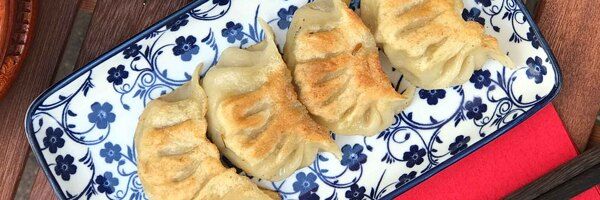
Preis: 8,00 EUR
Allergene: 2, 6, A, F
Dietäre Einschränkungen: vegan, DairyFree
Jiaozi gefüllt mit Hühnerfleisch 花椒雞肉餃 (4 Stück)
Gebratene Teigtaschen mit Szechuan Pfeffer und Hühnerfleisch, pikant
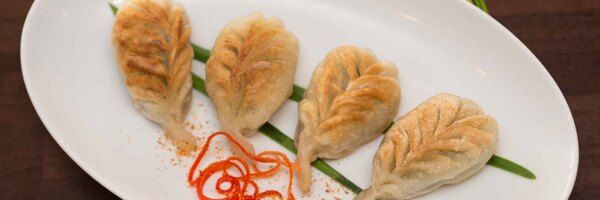
Preis: 8,00 EUR
Allergene: 4, A, B
Dietäre Einschränkungen: DairyFree
Frischkäse-Taschen 奶酪⾓ ⓥ veggie (4 Stück)
Knusprig gebackene Wan Tan-Teigtaschen, gefüllt mit Frischkäse
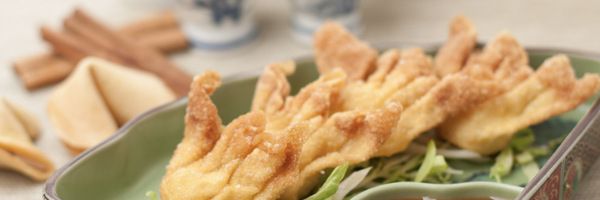
Preis: 7,00 EUR
Allergene: A, G
Dietäre Einschränkungen: vegetarian, DairyFree
Mango-Garnelen Röllchen 芒果蝦卷 (4 Stück)
Knusprig gebackene Soja-Blätter, gefüllt mit Garnelen und Mango, garniert mit Mayonnaise
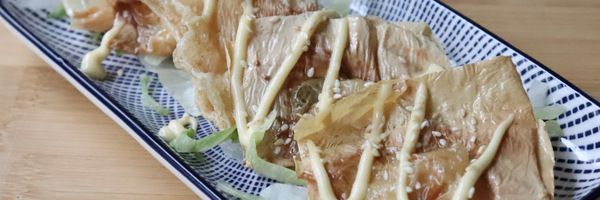
Preis: 7,00 EUR
Allergene: B
Dietäre Einschränkungen: DairyFree
Wo Tip (Jiao Zi) 煎餃⼦ (4 Stück)
Gebratene Teigtaschen mit Schweinefleisch und Chinakohl
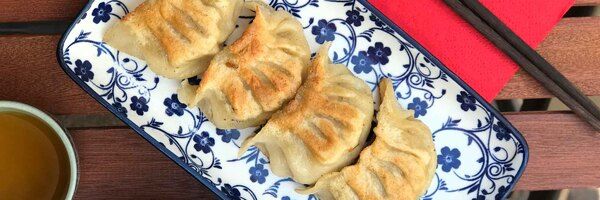
Preis: 8,00 EUR
Allergene: 2, 4, A, B, F
Dietäre Einschränkungen: DairyFree
Klebreis-Tofu-Tasche 素菜鹹⽔⾓ ⓥ vegan (3 Stück)
Süßlicher Teig aus Klebreismehl gefüllt mit Tofu, Fenchel und Schnittknoblauch
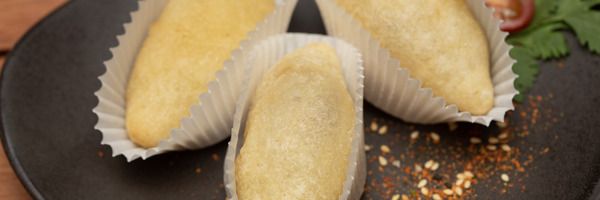
Preis: 8,00 EUR
Allergene: 1, 2, A, F
Dietäre Einschränkungen: vegan
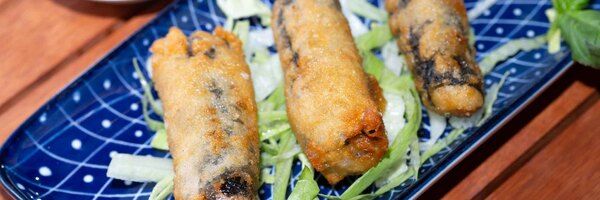
Seetang-Garnelen Röllchen 紫菜蝦卷 (3 Stück)
Garnelen in Seetang gewickelt, und knusprig frittiert
Preis: 8,00 EUR
Allergene: A, B
Dietäre Einschränkungen: DairyFree
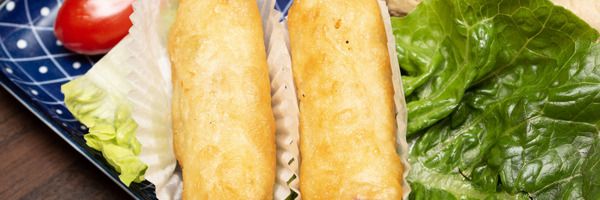
Gemüse-Glasnudel Röllchen 素菜粉絲卷 ⓥ vegan (3 Stück)
Gemüse und Glasnudeln, gerollt in Frühlingsrollen-Teig, serviert mit Süß-Sauer-Sauce
Preis: 7,00 EUR
Allergene: A, D
Dietäre Einschränkungen: vegan, DairyFree
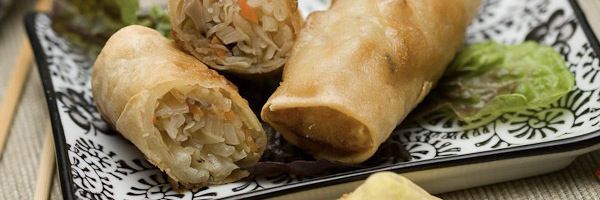
Frühlingsrolle nach Art des Hauses 春卷 (2 Stück)
Zwei Stück mit Hühner-, Entenfleisch und Gemüse
Preis: 7,00 EUR
Allergene: 1, 2, 4, 5, A, B, F
Dietäre Einschränkungen: DairyFree
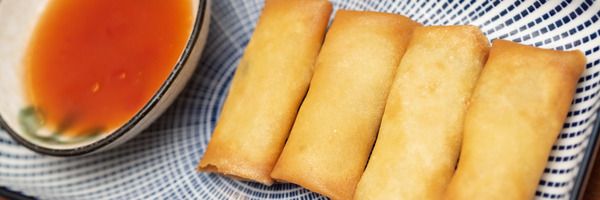
Mini Frühlingsröllchen 迷你素菜春捲 ⓥ vegan (5 Stück)
Gefüllt mit Gemüse
Preis: 4,50 EUR
Dietäre Einschränkungen: vegan, DairyFree
Rettich-Reibekuchen 蘿蔔糕 ⓥ vegan (3 Stück)
Gebratene Reibekuchen aus Rettich, mit Shitake-Pilzen und Karotten, serviert mit Hoisin-Dip
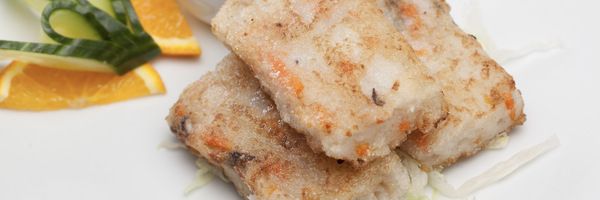
Preis: 8,00 EUR
Dietäre Einschränkungen: vegan, DairyFree, GlutenFree
Rindfleisch Bao Zi ⽜⾁煎飽 (3 Stück)
Gebratene Hefeteig-Brötchen, gefüllt mit Rindfleisch
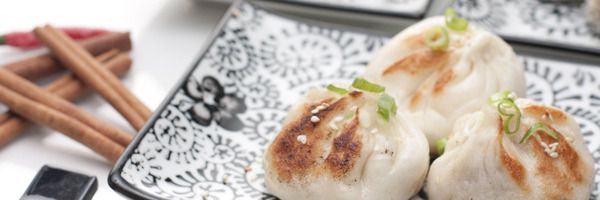
Preis: 8,00 EUR
Allergene: 2, 4, A, B, F
Dietäre Einschränkungen: DairyFree
Süße Dim Sum


Making of Mochi

Making of Mochi

