

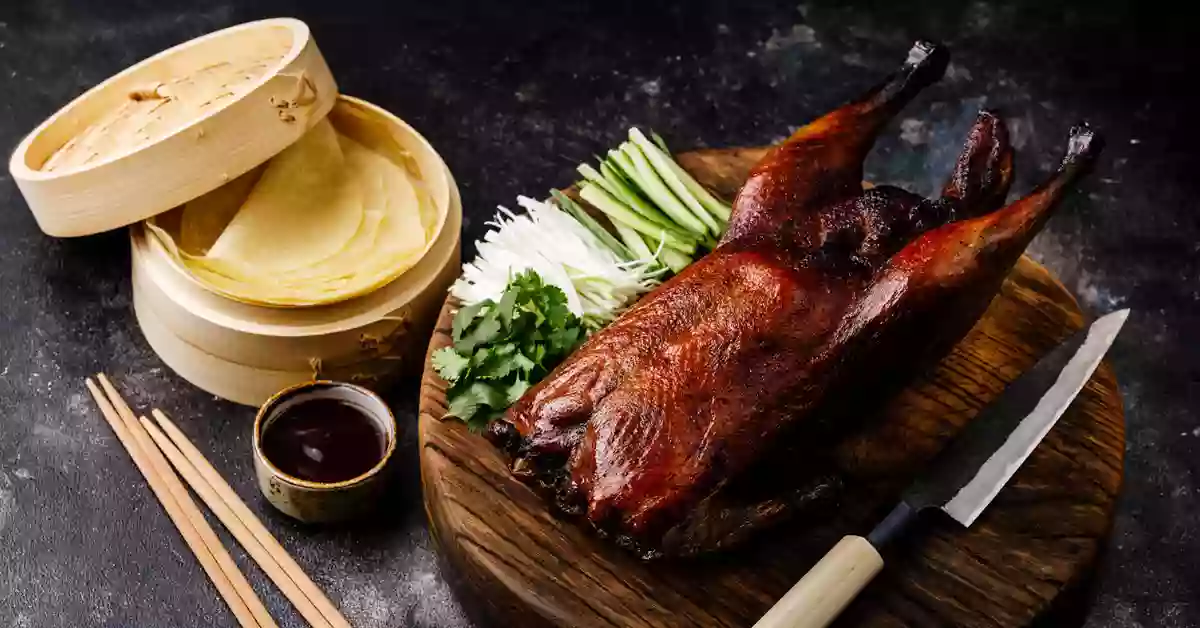
Peking Duck – Nutritional Context
A factual view on preparation, portions and transparency.
Why we talk about benefits – without health claims
When it comes to food, precision matters. We explain how our Peking Duck is prepared, which ingredients we use, and which culinary decisions we consciously make – without promising medical effects.
For us, Peking Duck is not a “superfood” but a traditional dish defined by technique, honest ingredients, and a thoughtful serving concept. Learn more about its cultural role at Peking Duck as a Symbol of Chinese Cuisine and its background at History of Peking Duck.
Peking Duck as a protein source
Duck is a high-quality source of protein. This is a factual nutritional description, not a health promise. For detailed values, see /en/nutritional-values-for-peking-duck/.
No flavor enhancers, no MSG
Our traditional preparation deliberately avoids flavor enhancers and MSG. This reflects our cooking philosophy: flavor is built through time, temperature, roasting, and spices – not additives. Our homemade hoisin sauce is also free from flavor enhancers.
Fat loss through preparation
During preparation, the duck loses a significant amount of its own fat. From around 2.2–2.4 kg raw weight, the finished duck weighs about 1.2–1.4 kg. This process results in noticeably leaner meat compared to many other methods.
Simple marinade with selected spices
Our marinade is intentionally minimal: salt, pepper, ginger powder (砂礓粉), cinnamon stick, star anise, and spring onions. This keeps the natural flavor of the duck in focus. Preparation details: /en/how-to-prepare-the-peking-duck/.
Final airfry technique
Shortly before serving, the duck is finished using an airfry technique. Additional fat can escape while the meat remains juicy, resulting in crisp skin and tender meat.
Menu serving concept: skin and meat separated
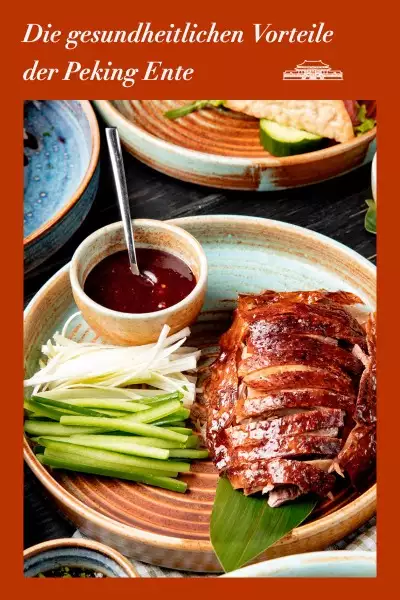
When ordered as a menu, the duck is served in two courses: first the crispy skin with pancakes, spring onions, and cucumber; then the meat as a separate course. More at /en/serving-peking-duck/ and /en/peking-duck-pancakes/.
Meat served on fresh vegetables
The duck meat is served on freshly prepared vegetables such as pak choi, broccoli, carrots, mushrooms, red onions, and spring onions, creating balance in texture and flavor.
Homemade hoisin sauce without additives
Our homemade hoisin sauce contains no flavor enhancers and complements the duck without overpowering it. More at /en/sauce-for-peking-duck/.
Further reading
Explore more at /en/the-peking-duck/, /en/history-of-peking-duck/, and /en/faq-peking-duck/. Also recommended: /en/peking-duck-and-wine/.