

Ginger – meaning & use in Chinese cuisine
Ginger – The Warming Breath of Earth
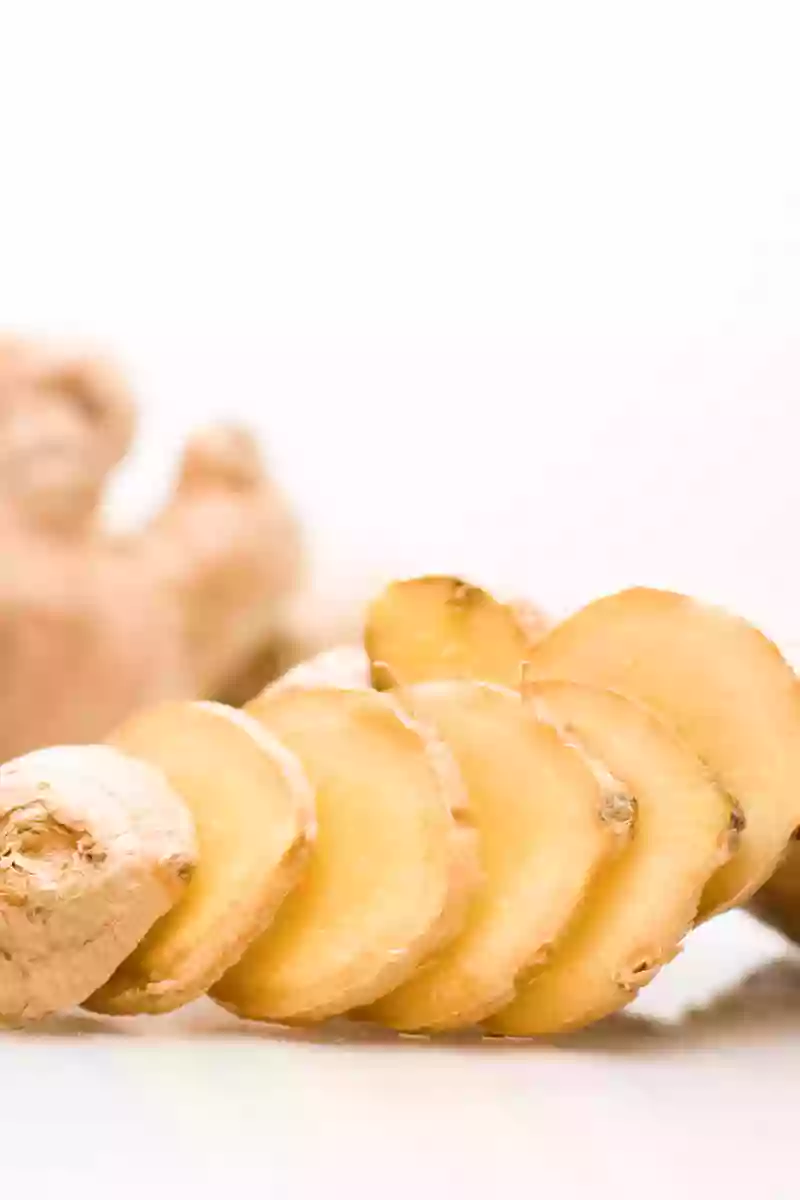
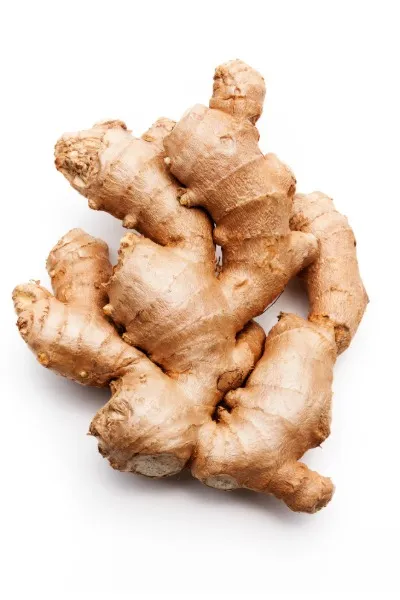
Ginger („Jiāng“, 薑), botanically Zingiber officinale, is the living breath of Chinese cuisine – the „king herb against cold“ of TCM. With its pungent sharpness and warm nature, it penetrates like sunlight into the body’s deepest corners: dispelling external cold at the onset of a cold, warming the cold Center during nausea, and expelling toxic heat outward. Yet ginger is not one-dimensional: Fresh ginger (Shēng Jiāng) works superficially and releasing; dried ginger (Gān Jiāng) penetrates deep into the Center; charred ginger (Pào Jiāng) even reaches the deepest level of the Kidneys. This trinity makes it the most versatile spice in TCM – an unassuming rhizome with the power of a fire dragon.TCM essence: Ginger teaches the art of „warming movement“: it brings not only warmth but sets Qi and Blood in motion – like a gentle wind dispelling winter without burning the earth. Ideal for cold sensitivity, morning nausea or after consuming raw fish.

TCM Classification Overview
| Element | Fire (火) – through warmth; Wood (木) – through movement |
|---|---|
| Flavor | Pungent (辛) primary, slightly Sweet (甘) secondary |
| Temperature | Warm (温) – fresh; Hot (热) – dried |
| Primary Organs | Stomach (胃), Lung (肺), Spleen (脾) |
| Actions | Expel cold, move Qi, stop vomiting, detoxify (especially seafood), open pores |
| Special Feature | Only ingredient that simultaneously RELEASES external cold (Sheng Jiang) AND warms internal cold (Gan Jiang) |
In Five Element theory, ginger embodies Fire’s dynamic power: it brings movement to stagnation, warmth to cold – yet always controlled, never destructive. Its pungent flavor opens pores and expels pathogens outward.
Three Faces of Ginger – TCM Differentiation
1. Fresh Ginger (Shēng Jiāng, 生薑):• Temperature: Warm (温)
• Actions: Opens surface, releases external cold, stops vomiting, detoxifies fish/crustaceans
• Use: Early cold with chills, morning nausea, raw fish/crustaceans
2. Dried Ginger (Gān Jiāng, 幹薑):
• Temperature: Hot (热)
• Actions: Deeply warms Spleen/Stomach, stops cold-type diarrhea, strengthens Yang
• Use: Chronic abdominal cold, watery diarrhea, cold extremities
3. Charred Ginger (Pào Jiāng, 炮薑):
• Temperature: Warm (温)
• Actions: Stops bleeding from cold (e.g., menstrual), warms Kidneys
• Use: Dark-red menstrual bleeding with cold sensation, postpartum bleeding
TCM wisdom: „Sheng Jiang releases, Gan Jiang warms, Pao Jiang secures“ – three actions, one rhizome.
Nutritional Profile per 100 g dried (Source: Ernaehrung.de)
Ginger is nutrient-dense despite low calories when fresh: Dried contains 315 kcal | Carbohydrates 60 g | Protein 7.4 g | Fat 3.3 g | Fiber 5.91 g | Water only 18.32 g.Key compounds:
• Gingerols & Shogaols (essential oils) – carriers of TCM warmth
• Zingiberene (terpene) – opens the surface
• Resin acids – stop vomiting
In TCM, high pungent oil content reflects ability to move Qi and dispel cold. Drying concentrates these compounds – hence its hotter nature.
Key TCM Actions
1. Release external cold (Sheng Jiang): At first cold signs with chills, clear runny nose – 3 slices fresh ginger steeped 10 min in hot water, induce light sweating.2. Harmonize Stomach Qi: Stops all forms of nausea – especially effective for pregnancy nausea (suck 3 thin slices).
3. Seafood detoxification: Traditionally with fish/crustaceans – neutralizes their cold/cooling nature.
4. Warm Center Yang (Gan Jiang): For chronic abdominal cold, poor appetite, loose stools – base of many warming formulas.
5. Move Qi: Opens Liver during emotional stress – „the scent of ginger dispels cloudy thoughts“.
Warning: Contraindicated in Heat patterns (fever, red face, thirst) – would amplify heat!
Culinary Application – From Soup to Tea
Fresh Ginger (Sheng Jiang):• Soups: 3–5 slices added during cooking – never at start (loses pungency), but 10 min before end
• Cold tea: 5 slices + 2 scallions simmered 15 min – until light sweating occurs
• With raw fish: Thin slices as garnish or in marinade – detoxifies and warms
Dried Ginger (Gan Jiang):
• Medicinal soups: 2–3 g powder in long-simmered soups for deep warmth
• Diarrhea tea: With roasted rice („brown rice-ginger tea“)
Important: NEVER peel fresh ginger – the peel has slightly cooling effect balancing the rhizome’s heat (TCM principle of wholeness).
Herbal Combinations by TCM Principles
With Perilla leaf (Zi Su Ye): Double surface-opening for cold with nausea.With Peppermint (Bo He): Fresh ginger moderates mint’s extreme cooling – harmonizes temperature.
With Dates (Hong Zao): Classic balance – ginger moves, dates nourish; heat and sweetness neutralize.
With Cinnamon (Rou Gui): For deep Kidney cold – ginger opens, cinnamon warms the root.
Never combine with: Strongly cooling herbs like chrysanthemum in Cold patterns – counterproductive.
Dosage & Preparation
Fresh: 3–10 g daily (approx. 3–5 thin slices) – more creates heat.Dried: 1–3 g daily – more concentrated, hence lower dose.
Optimal preparation:
• For external cold: Lightly crush (opens cells), brief simmer (10 min)
• For stomach: Suck raw or soak in cold water (preserves resin antiemetics)
• For deep warmth: Roast until lightly brown (transforms Sheng Jiang toward Gan Jiang effect)
Storage: Fresh refrigerated up to 3 weeks; dried airtight 12 months. Mold = discard immediately (aflatoxins!).
Contraindications & TCM Precautions
Strictly contraindicated with:• Heat patterns: Fever >38°C, red face, strong thirst, yellow tongue coating
• Yin deficiency with empty heat: Afternoon fever, night sweats, flushed cheeks
• Hypertension in active phase (may elevate Yang)
Relatively contraindicated:
• Pregnancy 1st trimester (only for nausea under guidance)
• Gastric ulcers (may irritate)
TCM rule: „Ginger in the morning is like gold, in the evening like arsenic“ – morning strengthens Yang for the day; evening disrupts descending Yin and sleep.
Summary – Ginger's Gentle Revolution
Ginger embodies a central TCM truth: healing happens through movement, not stagnation. It is not a passive remedy but a catalyst – like a spark igniting fire without burning itself. In a world of extremes, it reminds us of the power of balance: warming without burning, moving without destroying. A thin slice of ginger in morning tea is more than spice – it is a daily meditation on the art of flowing.